XDJ AN Review with Links and Videos AlphaTheta Product Guide
- 4 days ago
- 7 min read
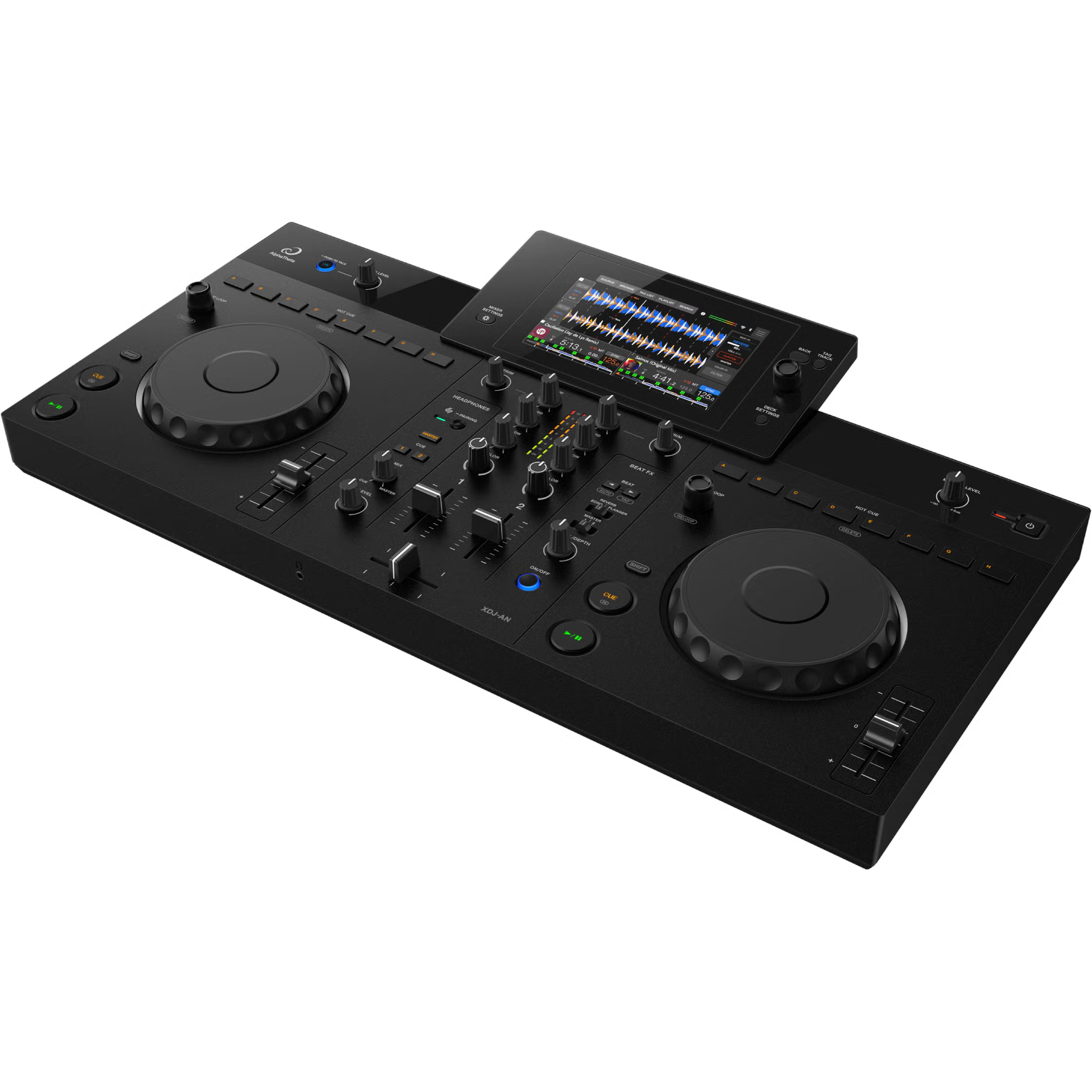
A good standalone DJ system should feel like a club setup without forcing you to carry a laptop, an audio interface, and a nest of cables. That is the promise behind AlphaTheta’s XDJ range. The only catch is the name: I cannot verify an official AlphaTheta product currently sold as XDJ-AN. If you found that name in a shop listing, forum post, or search result, it may be a typo, shorthand, or regional listing for a related XDJ model, most likely the AlphaTheta XDJ-AZ or another all-in-one XDJ unit.
This review treats “XDJ AN” as the product name you searched for, but keeps the details grounded in AlphaTheta’s real XDJ-style systems. Where a specific buying decision is involved, use the official links below to confirm the exact model, specs, firmware, and compatibility before ordering.
Quick verdict
The XDJ-AN, if it refers to AlphaTheta’s current all-in-one XDJ line, is aimed at DJs who want a standalone, club-style workflow without giving up modern library management, large jog wheels, performance pads, and a familiar mixer layout.
It makes the most sense for:
DJs who prepare music in rekordbox and want to play from USB
Mobile DJs who need one unit instead of separate players and a mixer
Bar, lounge, and event setups where space matters
Home DJs who want practice to feel closer to a booth setup
DJs moving from controllers to standalone gear
It is less convincing if you mainly want the cheapest way to mix at home. AlphaTheta all-in-one systems tend to cost more than laptop controllers. You pay for the standalone hardware, screen, mixer section, audio outputs, and the continuity with club gear.
Useful official links
Use these links to confirm the product name and current information before buying:
If your shop listing says “XDJ-AN”, compare its product photos, rear panel, screen, and spec sheet with the official AlphaTheta pages. Do not rely on a short store title alone.
Recommended videos to watch
Rather than guessing a specific video ID, these search links point to current video results. Look for uploads from AlphaTheta, Pioneer DJ, trusted DJ shops, and reviewers who show the unit in real use.
When watching reviews, pay close attention to four things: boot time, library browsing speed, jog wheel feel, and how quickly the reviewer can move between decks. Those details matter more than a flashy demo mix.
What the XDJ-AN is trying to be
AlphaTheta’s XDJ products sit between two worlds. On one side, there are laptop controllers, which are affordable and flexible but rely heavily on a computer. On the other side, there are full club setups with separate media players and a mixer, which feel excellent but cost more and take up more room.
An all-in-one XDJ system tries to give you the best parts of both:
A central display for browsing and waveforms
Two physical decks, with control for multiple channels on higher models
A mixer section with EQ, filters, cues, and effects
USB playback from prepared music libraries
A layout that feels familiar if you have used club CDJs or DJMs
That last point is one of the biggest selling points. If you practise on a small laptop controller, moving to a club booth can feel strange. The spacing, cue buttons, mixer controls, and screen behaviour all change. A larger XDJ unit helps bridge that gap.
Build and layout
The real strength of AlphaTheta’s better all-in-one units is the layout. Jog wheels are placed where they should be. Performance pads sit close to the deck controls. The mixer section feels logical, with channel faders, EQ, trim, cue buttons, and effects placed in a way that most DJs understand quickly.
For a home or mobile setup, that matters. You do not want to hunt through menus while mixing. You want play, cue, loop, beat jump, hot cues, and effects to sit under your hands.
The build is usually more serious than entry-level controllers. That does not mean you should throw it into a van without protection. A proper flight case or padded bag is still a smart buy, especially if you play weddings, bars, or private events around the Netherlands where gear often moves between cars, lifts, narrow stairs, and small DJ booths.
Screen and music browsing
The screen is central to the experience. On a standalone system, the display replaces much of what your laptop normally does. It needs to make track selection, waveforms, playlists, and cues easy to read.
A good XDJ screen should let you:
Browse playlists without slowing down the set
Search tracks quickly
See clear waveforms and beat grids
Understand which deck is active
Check BPM, key, time, and cue points at a glance
This is where prepared libraries matter. The system will feel much better if tracks are analysed properly in rekordbox before the gig. Set your beat grids, memory cues, hot cues, and playlists at home. Then the standalone unit becomes much faster to use.
If you throw unprepared files onto a USB stick at the last minute, you may still be able to play them, but you lose a lot of the value of the system.
Performance in a real DJ set
In real use, the appeal is simple: you can arrive, plug in power and speakers, load your USB, and play. No laptop stand. No USB cable to a controller. No software update surprise five minutes before your set.
That simplicity is a serious advantage for event work.
The mixing experience should feel close to AlphaTheta’s familiar club logic. Cueing is direct. Loops and hot cues are easy to trigger. Beat FX and sound colour style controls, where included, make transitions more expressive without needing extra gear.
The larger XDJ systems also suit open-format DJs because the workflow supports fast decisions. You can move from house to disco, hip-hop, pop, Afrobeats, or classics without staring at a laptop screen all night. The audience sees a DJ using hardware rather than someone hidden behind a computer.
That said, standalone gear has limits. Laptop software can offer deeper views, more plug-ins, more flexible library tools, and easier keyboard search. If you rely heavily on stems, complex software effects, or streaming-heavy workflows, check the exact model support before buying.
Sound and connectivity
AlphaTheta gear usually focuses on practical DJ connections. Expect the type of outputs and inputs suited to event and booth use, though the exact options depend on the model.
Before buying, check for:
Balanced master outputs for PA systems
Booth output for monitor speakers
Microphone inputs if you host events
Headphone cue controls that feel comfortable
USB ports for multiple DJs
Network or software features if you use linked devices
Recording options if you archive sets
For mobile DJs, microphone handling is especially important. A great DJ system can still become annoying if the mic section is too limited for speeches, announcements, or hosting. If you play weddings or corporate-style events, test the microphone workflow before committing.
For club-style home use, the master and booth outputs matter more. Pair the unit with honest monitor speakers, not huge bass-heavy speakers in a small room. You will make better EQ choices.
rekordbox and software support
The XDJ range naturally fits rekordbox. That is the cleanest path if you want to prepare tracks, export to USB, and play without a laptop. rekordbox also makes sense if you play on other AlphaTheta or Pioneer DJ club gear.
Some newer AlphaTheta systems may support other software workflows, including Serato DJ Pro, but support varies by exact model and firmware. Check the official product page and software pages before assuming anything.
A simple buying rule helps here:
Choose an XDJ-style standalone system
Choose a controller
If you want USB playback, a club-like layout, and less laptop dependence
If you want the lowest cost, deep software features, and you do not mind using a laptop
Both choices are valid. The better one depends on how and where you play.
Main strengths
Standalone workflow
The biggest win is being able to play from prepared media without needing a laptop. That reduces setup time and removes one possible point of failure.
Club-style practice
The layout helps prepare for booths using AlphaTheta or Pioneer DJ equipment. Muscle memory carries over better than it does from tiny controllers.
Cleaner event setup
For mobile use, one main unit is easier to manage than separate players, mixer, sound card, and laptop controller.
Good resale appeal
AlphaTheta gear often attracts strong interest on the used market, especially if it is well cared for. Keep the box, protect the unit, and document firmware and condition.
Main drawbacks
The name is unclear
If you are searching for “XDJ-AN”, confirm the exact product. AlphaTheta’s official pages are the safest reference. A wrong listing name can cause confusion around features, warranty, or included software.
Price can be high
All-in-one standalone systems cost more than many controllers. If you only mix at home once a month, a controller may be better value.
Standalone does not mean unlimited
You still need to verify file support, software compatibility, streaming options, and library behaviour. Never assume a feature exists because another XDJ model has it.
Size and weight matter
A serious all-in-one unit is still a large piece of gear. Measure your table, booth, case, and car space before buying.
Who should buy it
Buy the XDJ AN, or the real AlphaTheta XDJ model that your listing refers to, if you want a professional-feeling all-in-one setup with a familiar workflow and fewer laptop-related distractions.
It is a strong fit for DJs who play regularly, prepare their music properly, and value reliability over the lowest possible price.
Skip it if you are brand new and still learning whether DJing will stick. In that case, start with a more affordable controller and spend the saved money on music, headphones, lessons, or monitors. Good practice matters more than owning the biggest unit.
Final recommendation
The AlphaTheta XDJ-style all-in-one format is one of the most practical choices for DJs who want a serious setup without building a full booth from separate players and a mixer. It gives you a cleaner workflow, better hands-on control, and a closer link to the club standard than most compact controllers.
The only warning is the product name. I would not buy anything labelled “XDJ-AN” until I had matched it against AlphaTheta’s official product pages. If it turns out to be the XDJ-AZ or another confirmed XDJ unit, judge it by the features you will use every week: USB workflow, screen, jog feel, mixer layout, software support, and connections.
A good DJ system should make the next track easier to play, not make the setup more complicated. On that measure, AlphaTheta’s XDJ line remains one of the safest places to look.