The Future of Music Festivals How Technology Sustainability and Experience Will Shape Live Events
- 4 days ago
- 8 min read
The best music festivals have always been more than a line-up. They are temporary cities, emotional landmarks, and shared memories built from sound, light, mud, food, queues, friends, strangers, and the strange magic of being in the right field at the right time.
That magic will not disappear. If anything, it will matter more.
What will change is the system around it. The next generation of festivals will need to manage rising costs, climate pressure, crowded travel networks, changing audience habits, and a higher bar for safety and comfort. Technology will help, but it will not be the whole story. Sustainability will move from side project to operating principle. Experience design will become just as important as booking the headline act.
The future of music festivals will be shaped by a simple question: how can live events feel more human while becoming smarter, cleaner, and easier to run?
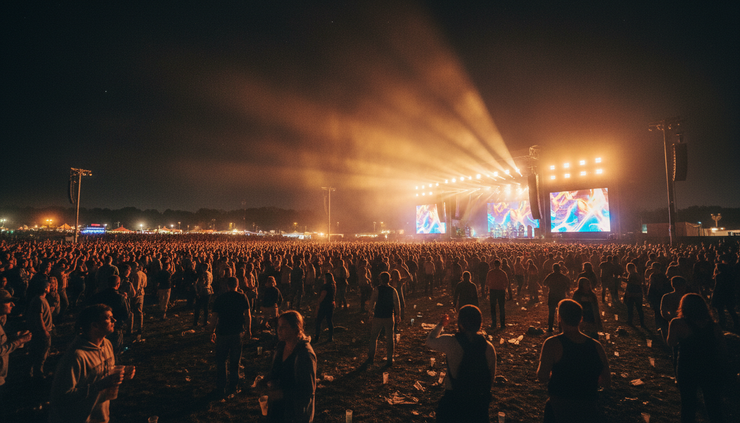
Technology will make festivals smoother without replacing the live rush
Festival technology works best when people barely notice it. Nobody buys a ticket to admire a payment system. They care when the beer queue is shorter, the site map makes sense, the sound is clear, and the journey home does not feel like a second endurance event.
The next wave of event tech will focus on friction. That means fewer bottlenecks at gates, cleaner communication during busy moments, and better use of live data.
Entry will become faster and more flexible
Digital tickets are already normal, but the gate experience still varies widely. Future systems will likely combine ticketing, identity checks, age verification, wristband access, and payment in a smoother flow.
That does not mean every festival will use facial recognition or heavy surveillance. In many places, privacy rules and public expectations will limit that kind of use. More realistic progress will come from:
Better timed arrival slots
Clearer pre-event travel guidance
Offline-ready tickets for weak mobile signal
Wristbands that handle access and payment
Separate lanes for families, accessibility needs, and camping entry
Good technology should reduce stress, not create a new layer of confusion.
Apps will become useful only when they do less
Festival apps often promise too much. They become cluttered with maps, timetables, brand content, alerts, food listings, friend finders, and push messages that arrive at the wrong time.
The better version is simpler. A useful festival app in the coming years will answer a few questions quickly:
What is playing now?
How do I get there?
Where is the nearest water point?
Has anything changed?
How busy is this area?
How do I get help?
The most valuable feature may be offline access. Large crowds can overwhelm networks, especially at rural sites. An app that works when the signal drops will matter more than one with flashy extras.
Data will help organisers design safer sites
Crowd flow is one of the hardest parts of festival planning. It affects safety, mood, queue times, food sales, noise bleed, and accessibility.
Sensors, anonymised movement data, and real-time reporting can help organisers spot pressure points before they become problems. If one entrance to a dance tent blocks up, staff can open a side route. If rain turns a path into a choke point, signs and stewards can redirect people sooner.
The key word is anonymised. Festivals need to be clear about what data they collect, why they collect it, and how long they keep it. Trust will decide whether audiences accept smarter event systems.
Sustainability will become part of the ticket value
For years, festivals treated sustainability as a visible add-on. A few recycling bins, a reusable cup scheme, a green campsite, perhaps a solar-powered stage.
Those things can help, but the real environmental impact sits in the basics: power, transport, food, materials, waste, water, and land use.
A greener festival is not created by one gesture. It is created by hundreds of operational choices, made early enough to matter.
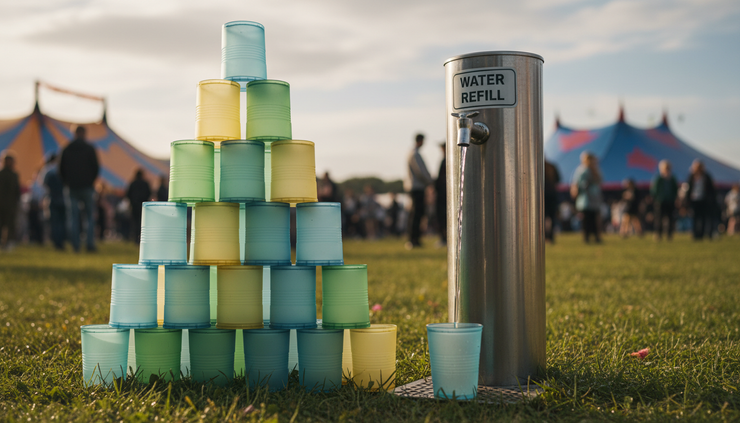
Power will move away from diesel by default
Many outdoor festivals still rely on temporary power, often from diesel generators. That is practical, but noisy and polluting. Future sites will use a mix of cleaner options where possible:
Grid connections for repeat-use locations
Battery storage for peak demand
Solar for smaller areas and daytime needs
More efficient stage, lighting, and catering equipment
Smarter power planning based on actual load
The biggest shift will be cultural. Power will no longer be treated as an unlimited background service. Every stage, bar, food trader, screen, and spotlight will need a clearer reason for the energy it uses.
Travel will matter more than cups
Audience travel is often one of the largest parts of a festival’s climate impact. That makes transport one of the most important design challenges.
In the Netherlands and across much of Europe, festivals have a strong chance to improve this because trains, coaches, cycling routes, and shuttle systems can work well when planned properly. The festival of the future will treat travel as part of the event, not as a problem left to visitors.
That could mean combined train and ticket packages, secure bike parking, more frequent shuttle buses, coach priority lanes, and arrival plans that spread traffic across the day.
Private cars will not vanish, especially for rural events and campers. But car use can become easier to share and better managed.
Waste systems will need to be designed for tired people
A waste plan that only works when everyone is calm, sober, and thinking clearly will fail by the second night.
The best systems are obvious. Bins use clear colours, simple signs, and repeat placement. Food vendors use the same approved materials. Deposit schemes give people a financial reason to return cups, plates, or containers. Campsite waste points sit where people naturally walk.
Sustainability succeeds when it feels easy.
Old festival habit
Single-use items, unclear bins, diesel-heavy power, car-first travel
Audience experience
Messy campsites, long exits, waste guilt, higher hidden costs
Future festival habit
Reusable systems, simple sorting, mixed clean power, planned shared travel
Audience experience
Cleaner spaces, smoother movement, visible purpose, better value
The festival experience will become more personal and more shared
The live event economy has changed. People can watch performances online, discover artists instantly, and build their own listening worlds through streaming. That raises the value of what cannot be copied at home.
A festival has to offer more than access to songs. It has to offer atmosphere, freedom, discovery, and belonging.
Line-ups will become wider and more local
Major headliners will still sell tickets. That will not change. Yet festivals will become less dependent on one giant act as artist fees rise and touring schedules become harder to secure.
More festivals will build identity around curation. That means stronger daytime programming, local scenes, emerging artists, talks, film, art, food, wellness, and late-night spaces with a clear character.
This helps smaller festivals compete. A festival with a point of view can become memorable without trying to outspend the biggest names.
Stages will become more immersive
Sound and lighting design will keep improving, but the most interesting changes may happen around smaller stages. Projection, spatial audio, responsive lighting, and set design can turn a tent or woodland stage into a complete world.
The risk is excess. Huge screens and constant visual noise can flatten the experience if every moment tries to be spectacular.
The strongest festivals will use technology to support mood. A quiet ambient stage at sunset needs a different design language from a midnight electronic set. Better experience design means knowing when to hold back.

Comfort will no longer be treated as boring
For a long time, discomfort was almost part of the festival myth. Bad toilets, poor sleep, weak phone signal, confusing signs, and overpriced basics were accepted as normal.
That tolerance is fading. People still want adventure, but they also expect basic care. Clean water, safe paths, good toilets, quiet areas, shade, medical support, and clear information are not luxury features. They shape whether people return.
This matters even more for accessibility. Future festivals will be judged on how well they include people with different mobility, sensory, medical, and communication needs.
Strong accessibility planning includes:
Step-free routes that stay usable in bad weather
Viewing platforms with fair access
Quiet spaces away from heavy sound
Clear information before tickets go on sale
Trained staff who know how to help
Campsites and toilets placed with real distances in mind
A festival becomes better for everyone when it works for more bodies, needs, and energy levels.
Hybrid events will find a clearer role
Online festivals grew during periods when live events could not happen. Once crowds returned, many digital versions lost attention. That does not mean hybrid formats are dead.
They just need a better purpose.
A livestream cannot recreate the feeling of bass moving through a field. It can help fans who cannot travel. It can give smaller artists wider reach. It can turn one performance into a later documentary, archive, or paid replay. It can connect remote audiences to talks, workshops, and behind-the-scenes material.
The future hybrid festival will not pretend that watching from a sofa is the same as being there. It will offer a different layer.
Good hybrid design might include:
Selected performances, not the whole weekend
High-quality sound rather than just multiple camera angles
Replays for different time zones
Access for people who cannot attend in person
Digital extras that do not interrupt the live crowd
The danger is filming everything until the site feels less free. Festivals work because they allow people to step outside daily life. Organisers will need to protect that feeling.
Safety, trust, and wellbeing will define the best events
Future festivals will need to be more open about safety. Weather is less predictable. Heat, heavy rain, strong wind, and muddy ground can all change a site quickly. Crowds also expect better systems for harassment reporting, welfare support, drug harm reduction where legally allowed, and mental health care.
This is not about making festivals feel controlled. It is about creating conditions where people can relax.
Clear safety systems work best when they are visible but not oppressive. Friendly stewards, calm signage, well-lit routes, trained welfare teams, and easy reporting channels can make a large site feel manageable.
Weather planning will become especially important. More shade, more water, stronger drainage, better ground protection, and flexible schedules will become normal. Some festivals may shift dates or rethink site layouts because of heat and rain patterns.
A good festival in the future will not simply react to problems. It will design around them before gates open.

The business model will have to become more honest
Running a festival is expensive. Stages, staff, security, insurance, artist fees, toilets, fencing, transport, licences, power, and weather planning all cost money before the first act plays.
At the same time, audiences feel price pressure. A ticket is rarely the full cost once travel, food, drinks, camping gear, lockers, and time off are included.
Future festivals will need clearer value. Some will become more premium, with smaller crowds, better facilities, and higher prices. Others will stay affordable by focusing on local artists, simple production, partnerships with public transport, and community support.
The middle may be hardest. Large enough to carry major costs, but not distinct enough to justify rising prices.
Transparency can help. People are more likely to accept costs when they understand what they pay for. A festival that explains its sustainability fee, transport plan, or reusable cup deposit clearly will earn more trust than one that hides charges until checkout.
What the next great festival will feel like
The future festival will not feel like a tech demo. It will feel easy.
Arrival will be calmer. The app will work when the signal drops. The toilets will be cleaner. The food area will have fewer bins and less waste. The main stage will still deliver the huge shared moment, but the smaller stages will carry more of the soul.
The site will use power more carefully. Travel will be planned as part of the weekend. Accessibility information will be clear before anyone buys a ticket. Weather plans will be visible. Staff will know what to do when something goes wrong.
Most of all, the best festivals will protect the reason people come in the first place. Not the wristband, not the screen, not the content, but the rare feeling of standing with other people as music fills the air.
Technology can make that easier to reach. Sustainability can make it possible to keep doing. Better experience design can make it more welcoming.
The festivals that last will be the ones that treat every choice, from the headline act to the water point, as part of the same promise: a live event worth leaving home for.